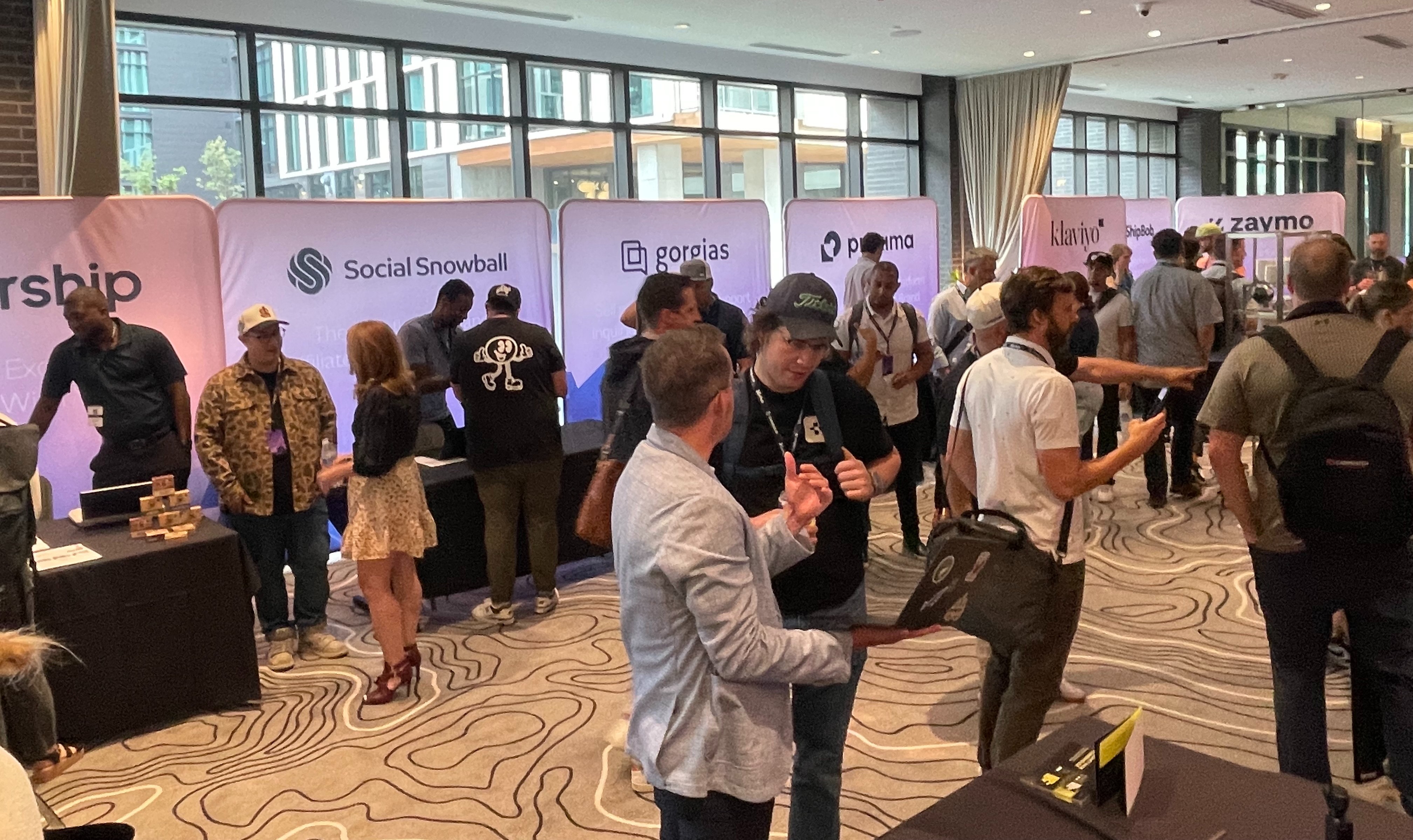
Walk any major trade show floor and you'll see the same pattern repeat itself. Dozens of booths with a table, a backdrop, a bowl of candy, and two reps standing with their arms crossed, waiting for someone to stop. Attendees walk past all of them.
Then there's the booth with a line. People waiting. Phones out. Conversations happening. Badge scans stacking up.
The difference almost never comes down to budget. It comes down to whether the booth gives attendees a reason to stop, a reason to stay, and a reason to remember you a week later when they're sorting through a stack of business cards.
This guide covers the activation ideas that consistently work at indoor trade shows, why they work psychologically, and how to pick the right ones for your goals, your audience, and your booth size.
Why Activations Matter More Than Ever
Trade shows are one of the few remaining environments where you get undivided, face-to-face attention from qualified buyers. But attendee behavior has changed in ways that make passive booths less effective than they used to be:
Attention spans are shorter. The average attendee walks past 150+ booths per day. You have roughly three to seven seconds to communicate who you are and why they should care.
Buyers research before they arrive. Most attendees already know the vendors they want to see. If you're not on their list, you need something compelling enough to interrupt their plan.
Everyone has swag. Branded pens, stress balls, and tote bags no longer differentiate. They get collected, dumped in a hotel room, and forgotten.
Social is part of the ROI. Attendees post from the show floor constantly. Booths designed to be photographed generate reach far beyond the people who physically attended.
Activations solve all four problems. They interrupt, they differentiate, they create memory, and they generate content.
The Psychology of What Actually Stops Someone
Before the tactics, it's worth understanding the three underlying mechanisms that make any activation work:
Curiosity. Something unexpected or incomplete that the brain wants resolved. A puzzle, an unusual object, a question with no obvious answer.
Reciprocity. When someone receives something of value, they feel a natural pull to give something back — attention, time, contact information.
Social proof. People stop where other people are already stopped. A booth with three engaged attendees attracts a fourth. An empty booth stays empty.
The best activations trigger at least two of these at once. As you read through the ideas below, notice which mechanisms each one leans on.
Activation Ideas That Consistently Work
1. Live Product Demonstrations on a Schedule
Why it works: Social proof plus scarcity. A posted demo schedule ("Live demos at :15 and :45 every hour") creates appointment-based traffic instead of random drift.
How to do it well: Keep demos to 5–7 minutes. Post the schedule visibly at the booth perimeter and in your pre-show marketing. Have a dedicated demo zone with a counter at standing height so attendees can gather without blocking your aisle. Train a presenter, not just a rep — the quality of delivery matters enormously.
Best for: Products with a visual or tactile component. Software with a genuinely impressive interface. Hardware. Anything where seeing beats describing.
2. Hands-On Product Trial Stations
Why it works: Interaction creates ownership. Attendees who physically touch a product feel more connected to it and remember it longer than those who only hear about it.
How to do it well: Build the station so one person can engage without a rep hovering. Put short instructions on the counter. Position reps nearby to answer questions when they arise rather than intercepting immediately. Capture contact info as part of the experience — a "send me the results" or "email me the spec sheet" prompt converts far better than a cold ask.
Best for: Physical products, tools, materials, equipment, anything with a tactile quality that a brochure can't convey.
3. Interactive Digital Experiences
Why it works: Novelty plus participation. Touchscreens, configurators, AR experiences, and interactive displays invite engagement without requiring a sales conversation first.
How to do it well: Keep the interaction under 90 seconds. Make the first action obvious — if someone has to figure out what to do, they won't. Build lead capture into the flow naturally ("Enter your email to get your results"). Mount screens into your booth structure rather than propping them on a table.
Best for: Complex or invisible products — software, services, logistics, financial products — where you need to make something abstract feel tangible.
4. Assessment, Quiz, or Diagnostic Tools
Why it works: Self-interest. People are fundamentally interested in information about themselves and their own situation. "How does your process compare?" is a far stronger hook than "Here's what we do."
How to do it well: Five to seven questions maximum. Deliver an immediate on-screen result, then offer a detailed version by email. The real value here is qualification — the answers tell your sales team exactly where that lead sits before anyone follows up.
Best for: B2B services, consulting, software, and any category where buyers are uncertain about their own needs.
5. Expert Consultations and Office Hours
Why it works: Genuine value exchange. Attendees get real expertise for free; you get a deep, qualified conversation.
How to do it well: Advertise it clearly — "15-minute strategy sessions with our lead engineer." Offer pre-booked slots through pre-show outreach, plus walk-in availability. Create a semi-private space in your booth with seating so the conversation can go deeper than a standing chat.
Best for: High-consideration purchases with long sales cycles where trust and expertise drive the decision.
6. Branded Photo Moments
Why it works: Social amplification plus curiosity. A well-designed photo backdrop turns every attendee into a distribution channel.
How to do it well: This is where most brands get it wrong. A step-and-repeat with logos is not a photo moment — it's wallpaper. The best photo activations have a concept: an oversized version of your product, an unusual prop, an illusion, a themed set. Make sure your brand is legible in the frame without dominating it, and post the hashtag prominently.
Best for: Consumer brands, lifestyle categories, and any show where the audience is socially active. Also strong for B2B brands wanting to feel more human.
7. Competitions, Challenges, and Leaderboards
Why it works: All three mechanisms at once. Curiosity draws people in, competition keeps them engaged, and a visible leaderboard creates social proof that pulls in more participants.
How to do it well: The challenge should take under two minutes and relate loosely to your product or category. Display a live leaderboard prominently — it's the single biggest driver of repeat visits to your booth. Award a meaningful prize at a set time each day, which brings people back.
Best for: Shows where you're competing for attention against many similar vendors, and audiences that skew competitive (sales, engineering, athletics, gaming).
8. Premium Refreshments
Why it works: Reciprocity, plus pure practicality. Trade show floors are exhausting. The booth with good coffee becomes a destination.
How to do it well: Quality over novelty. A real espresso machine with a trained barista beats a gimmicky colored drink. Serve during predictable windows so attendees learn to come back. Use the wait time — three minutes in line is three minutes a rep can have a genuine conversation.
Best for: Large booths at multi-day shows, especially when you want to create a hub-and-dwell environment rather than quick transactions.
9. Mini Education Sessions
Why it works: Value-first positioning. You're teaching rather than selling, which lowers resistance and builds authority.
How to do it well: Keep sessions to 10–15 minutes on a published schedule. Pick genuinely useful topics that aren't thinly veiled product pitches — attendees can tell the difference immediately. Provide seating if your footprint allows. Record the sessions for post-show content.
Best for: Technical audiences, regulated industries, and categories where buyer education is part of the sales process.
10. Customer Showcases
Why it works: Social proof at its most powerful. A peer explaining how they solved a problem with your product is more persuasive than any claim you can make yourself.
How to do it well: Invite a customer to spend an hour or two in your booth. Display their results on a large graphic panel. Run short conversational sessions rather than formal presentations. If a customer can't attend in person, video testimonials on a large screen work nearly as well.
Best for: Enterprise sales, high-ticket purchases, and shows where your competitors all make similar claims.
11. Personalization and Custom-Made Items
Why it works: Reciprocity plus dwell time. Something made specifically for an attendee carries more perceived value than something handed out en masse — and the production time creates a natural conversation window.
How to do it well: On-site engraving, custom embroidery, personalized prints, or made-to-order items all work. The key is the wait: 3–5 minutes of production time is 3–5 minutes of conversation. Build the wait into your booth layout with a defined area.
Best for: Any show where you want higher-quality conversations rather than maximum badge scans.
12. Charitable or Purpose-Driven Activations
Why it works: Emotional engagement and positive brand association. "Every demo we run today funds a meal donation" gives attendees a reason to engage that has nothing to do with your product.
How to do it well: Pick a cause with genuine connection to your brand or industry — arbitrary charity tie-ins read as cynical. Display live progress toward the goal. Follow through publicly after the show.
Best for: Brands with an established values position, and shows with a community or mission-driven audience.
How to Choose the Right Activation for Your Booth
More ideas isn't better. The best trade show programs pick one or two activations and execute them well. Use these filters:
Start with the goal. Maximum lead volume points toward quizzes, competitions, and giveaways. Qualified pipeline points toward demos, consultations, and customer showcases. Brand awareness points toward photo moments and large-scale visual activations.
Match your booth size. A 10x10 can support a demo station, a quiz, or a personalization activation. Refreshments, seated education sessions, and multi-zone experiences need a 20x20 or larger.
Be honest about staffing. Every activation needs someone running it. If you have three people on the floor and one is always tied up at the espresso machine, you've effectively cut your sales coverage by a third.
Consider the show's culture. A gamified leaderboard that kills at a consumer expo may feel out of place at a clinical or regulatory conference. Read the room before you commit.
Design for throughput. Calculate how many people per hour your activation can serve. A 15-minute consultation serves four people an hour. A 60-second quiz serves sixty. Neither is wrong — but the math should match your goals.
The Booth Structure That Makes Activations Work
Here's what gets overlooked constantly: the best activation concept in the world fails inside a booth that doesn't physically support it.
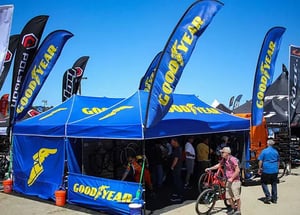
Visibility pulls people in. Attendees can't engage with an activation they never noticed. Tall elements, illuminated graphics, and overhead signage are what get someone to look your direction from forty feet away.
Layout controls flow. Activations need defined zones. Where do people queue? Where does the demo happen? Where does a longer conversation take place without blocking the aisle? Open sightlines invite entry; cluttered booths create barriers.
Counters and surfaces enable interaction. Demos, trials, personalization, and lead capture all need durable surfaces at the right height. Standing-height counters work better than seated tables for quick interactions.
Graphics do the explaining. Your booth should communicate what you do before anyone speaks. That frees your activation to deepen interest rather than establish basics.
Structure has to hold hardware. Screens, lighting, product displays, and signage all need somewhere to mount. Booth systems designed for integration beat improvised solutions every time.
How Strike Visuals Helps You Build the Right Booth
At Strike Visuals, we build the physical environments that make trade show activations work — and we build them custom, so your booth fits your activation strategy instead of forcing you to work around generic hardware.
Illuminated light box displays create the visual pull that stops attendees in crowded aisles. Edge-lit LED panels with seamless SEG fabric graphics look premium under any convention lighting, and they photograph beautifully — which matters when attendees are sharing from your booth.
Modular wall systems — straight, curved, and S-curved pillow case walls — give you backdrops that double as photo moments, product walls, and brand statements. Because they're modular, the same component inventory reconfigures across 10x10, 10x20, and island footprints as your show calendar varies.
PVC light box wall kits integrate shelving, hooks, rods, and TV mounts directly into the structure — so your screens, product displays, and interactive elements become part of the booth rather than afterthoughts bolted on.
Custom counters and table covers give you the durable, branded surfaces that demos, trials, personalization stations, and lead capture actually require. Fitted, stretch, and bar-height options cover every interaction type.
Hanging signs make you findable from anywhere in the hall — critical when your activation depends on attendees seeking you out rather than stumbling across you.
Banner stands and flags let you promote your demo schedule, education sessions, or challenge rules exactly where attendees need to see them.
Everything is fully custom printed with full-color dye sublimation — unlimited colors and logos at no additional cost, with no artwork fees. Our in-house design team helps optimize your graphics across every panel so the whole booth reads as one coherent environment.
Every frame and structural component carries our Lifetime Warranty. For teams exhibiting at multiple shows a year with constant shipping and setup, that turns a recurring replacement expense into a one-time investment. And when you need to refresh messaging for a new campaign, replacement graphics let you update the look without repurchasing hardware.
We also move fast. Late booth confirmations and last-minute artwork changes are normal in this industry, and our production process is built around that reality rather than an idealized timeline.
Putting It Together
The brands that win trade shows aren't the ones with the biggest booths or the most expensive giveaways. They're the ones who gave attendees a genuine reason to stop, something worth doing once they arrived, and a reason to remember the experience afterward.
Pick one or two activations that match your goals, your footprint, and your team. Then build a booth that physically supports them — visible from a distance, clear in its messaging, and structured to handle the flow of people your activation is designed to attract.
Visit strikenow.com or call 801-872-4055 to talk with our team about building a booth around your next trade show activation.